






Frequently Asked Questions
How is the allergy test performed, and is it painful?
How long does the allergy testing take?
Who can be tested?
Which allergens will be tested for?
What is immunotherapy?
How long will I have to be on immunotherapy?
How soon will I see results from immunotherapy?
What if I am currently taking antihistamines?
What are the benefits of allergy testing and immunotherapy?
Is immunotherapy effective in eliminating allergies?
Are the testing and immunotherapy covered by insurance?
Allergy Treatment
Why Suffer From Allergies?
Jeffrey S. Masin, MD has implemented allergy testing and multiple customized treatment services to its already extensive services offered to patients. The new allergy services include the gold standard in testing and two custom-formulated immunotherapy methods for desensitizing allergies over time that has been proven to effectively alleviate allergy symptoms for life.
“We want the best possible care and treatment for our patients,” says Dr. Masin. “This service can significantly increase our patients’ quality of life by reducing or eliminating allergy symptoms and discomfort.”
Patients who suffer from seasonal allergies can be tested at our practice for the 58 most geographically-specific mold and airborne allergens in the area. The medications, called allergy immunotherapy, are then custom-formulated based on the allergy test results and help desensitize patients to many of the pollens, molds and other triggers that cause their symptoms. This desensitization therapy can allow patients to be around those allergens without having an allergic reaction such as sneezing, coughing, runny nose, itchy and watery eyes, congestion, sleepiness, headache and nausea.
Allergy Treatment – Frequently Asked Questions
Allergen immunotherapy is a form of treatment aimed at decreasing an individual’s sensitivity to substances called allergens. It involves introducing increasing amounts of allergens to a patient over several months. Immunotherapy is administered in the comfort of the patients’ home, instead of some common allergy therapies that require an appointment at the physician’s office, saving patients time and money.
Our office offers two types of allergy immunotherapy: sublingual immunotherapy drops (SLIT) and subcutaneous immunotherapy injections (SCIT). Our newest treatment option, SLIT, is incredibly convenient. Patients are given their immunotherapy in a dropper bottle and dispense the drops under their tongue. This is a great alternative to shots, especially for children and those with a needle phobia. The treatment is also very affordable, costing around $50 a month.
Unlike allergy medicines, which act only to “cover up” allergic symptoms or prevent them temporarily, allergy immunotherapy can change the underlying problem of allergies. This occurs because the body treats the therapy much like a vaccine, resulting in the production of infection-fighting antibodies against pollen, dust, mold or pet dander. The body then stops producing allergic antibodies against triggers, and therefore won’t have allergic responses when exposed to the allergens. These changes can last for many years even after stopping allergy immunotherapy. Recent studies show that allergy immunotherapy can also prevent people from developing new allergies, and reduce the risk of developing asthma in children with nasal allergies.
“The testing is not painful. A tiny comb gently scratches or abrades the skin surface. After the test is performed, it takes about 15 minutes to develop. A positive test will appear as a raised, red bump on the skin, similar to a mosquito bite,” says Dr. Masin.
Caring for Your Hearing Aids
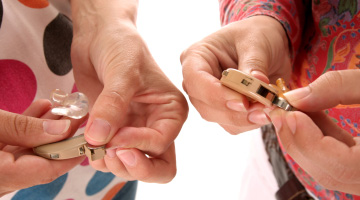 Hearing aids are complex digital devices that must be properly cared for to work their best. Since hearing aids are a major investment, it’s important to take the time to learn the right hearing aid care techniques for your devices.
Hearing Aid Maintenance
We encourage you to take the time to clean your devices every day. First, wipe down all surfaces of the device with a soft, dry cloth. Never use water, solvents, cleaning fluids or alcohol on your hearing aids, as moisture will damage them if it reaches the electronic components. Use a cleaning tool or kit to reach all areas, paying specific attention to the tubing, battery contacts and wax filter.
While today’s hearing aids are sealed with a microscopically thin layer of waterproofing material, you should still take care to avoid exposing the devices to potentially harmful substances. For example, apply hairspray, moisturizer, sunscreen and lotions before inserting your hearing aids, and wash your face before inserting your hearing aids for the day.
Troubleshooting Tips
Since hearing aids are such intricate devices, they may malfunction from time to time. You may need to see your audiologist for repair in some situations, but you should try a few basic troubleshooting techniques at home first. Here are some tips for caring for your hearing aids at home:
- Feedback or whistling often occurs when your hearing aids are inserted incorrectly. Try removing and replacing them in your ears. If this does not resolve the issue, earwax might have accumulated and clogged the ports. Clean the devices thoroughly with your multi-tool or a wax pick.
- Distorted or unclear sound may occur when your battery or battery contacts are dirty or corroded. Try cleaning the battery surfaces or replacing the battery. You should also check to ensure your device isn’t actually set to telecoil mode.
- If there is no sound at all, start by replacing the battery and checking for a clogged microphone or sound outlet. You may also need to replace the wax filter.
Hearing Aid Batteries and Repairs
When you invest in hearing aids, your audiologist will spend time with you to ensure you understand how to get the most out of your devices. This will include going over how to change programs, control your devices, perform effective nightly cleanings, replace the batteries and take action if your device is malfunctioning. We offer many services at our Akron offices to help you adapt to life with hearing aids.
Hearing Aid Batteries
Most hearing aids use one of five types of batteries, each of which has a number and color assigned to it. This color system is designed to make battery shopping easy in any environment. Smaller batteries tend to have shorter lifespans, so you should always have many spare batteries on hand. You can purchase hearing aid batteries at most big box stores, drugstores, online or from your audiologist directly.
Hearing aid batteries should be stored at room temperature and left unopened until use. Hearing aids use zinc-air batteries that are activated when a small tab is pulled out of the battery, exposing it to air. Once you’ve activated your battery by pulling this tab, wait several seconds to allow it to fully charge before inserting it into your device. We recommend that you take your hearing aid batteries out each night in order to clean the battery and contacts as well as save battery life.
Hearing Aid Repair
Many basic hearing aid repairs can be performed in-office by your audiologist or a hearing instrument specialist. In some cases of a more complicated electronic repair, your audiologist will have to send the device to the manufacturer. You should spend time with your audiologist to ensure you fully understand the terms of your warranty after choosing a hearing aid in order to take full advantage of any repair options you have during your warranty period.
Hearing Aid Accessories
 Hearing aid accessories come in many varieties and are designed to meet users’ specific needs. While today’s advanced digital hearing aids are more effective than ever before, they still fall short in certain situations. Hearing aid accessories are designed to fill in your needs when your hearing aids fall short on their own.
Types of Hearing Aid Accessories
There are several different types of hearing aid accessories that serve varying purposes. Here’s a look at some of the most popular hearing aid accessories our Akron patients choose:
Bluetooth® Accessories
Wireless connectivity is important in today’s technological world, and Bluetooth devices make connecting with all the electronics in your life simple. There are several different styles of wireless accessories to choose from, though they all perform the same basic function. These accessories allow you to stream audio from your smartphone, TV, computer, tablet, MP3 player, in-car entertainment system and any other Bluetooth device straight to your hearing aids so you never miss a word.
Batteries & Parts
Batteries are essential to your hearing aids’ functionality, and you should always have several spares on hand at home, at work and on the go. Some hearing aid styles may also have other disposable components including tubing and wax filters. If your hearing aids have any disposable parts, be sure to keep at least two of each component on hand.
Cleaning Tools and Dehumidifiers
There are several cleaning tools and kits available, and many hearing aid users choose to invest in at least one tool to make nightly cleaning more efficient and effective. Dehumidifiers are another great option for removing all earwax and moisture from your devices. They can be used overnight while you sleep, making the cleaning process a breeze.
Phones
There are several phones made specifically for those with hearing loss. Different models perform different functions, including phones that light up when ringing, phones that display conversations in captions, and phones that transmit audio directly to your hearing aid wirelessly. If you struggle with phone conversations, ask your audiologist which type of accessory would work best for your needs.
Microphones
Personal microphones are great accessories for Akron hearing loss patients who often find themselves struggling to hear conversations in noisy environments. Microphone accessories are typically small clip-on or pen-shaped devices that can be worn by speaker or placed on a surface nearby. These hearing aid accessories transmit the speaker’s voice directly to your hearing aids for clear communication.
Assistive Listening Devices
Assistive listening devices (ALDs) are personal amplifications systems that work great in situations where the speaker is far away, there is excessive background noise or the environment creates poor acoustics. ALDs have two parts: the transmitter and microphone component, which is placed near the source of sound, and the receiver and speaker, which is worn near your ear. ALDs are popular in theaters, classrooms, churches, conference rooms, courtrooms, lecture halls and more.